
The sun shines different ways in summer and winter. And we shine differently in the seasons of our lives.
— Terri Guillemet
When you consider “age,” there are a number of possibilities. The simplest definition is “the length of time that a person or animal has lived or a thing has existed.” Easy enough, right? However, there is more to “old” or age than a number can define. Age could be a stage of life, ranging from childhood to adulthood and into “old age.” It could be a historical period of time in history, such as the Bronze Age, the Roaring Twenties, the Depression, and so on. Age can also be a verb, referring to growing older, maturing (often getting better with time) and point to the effects of time on anything – wine, cheese, metal, wood, skin and more. There may be a desire in all of us on some level to age gracefully, though we are not always able to steer that boat in the way we would like.
As a photographer, I have come to know and accept that I have a love for old things. I have an affinity for subjects that usually lack the shine or sheen of newness. I am drawn to and appreciate things that are worn, well used. and that have patinas, rough edges and imperfections. I love finding fallen skeleton leaves, old barns, cars, tools and even flowers that have reached beyond their prime peak stage of what others perceive as beauty. Wabi Sabi subjects (those that reflect imperfection, impermanence and incompleteness) will always turn my head and hold my attention. It is one of the reasons I still have and add to collections of dried flowers, seeds, pinecones and even what many would consider weeds.
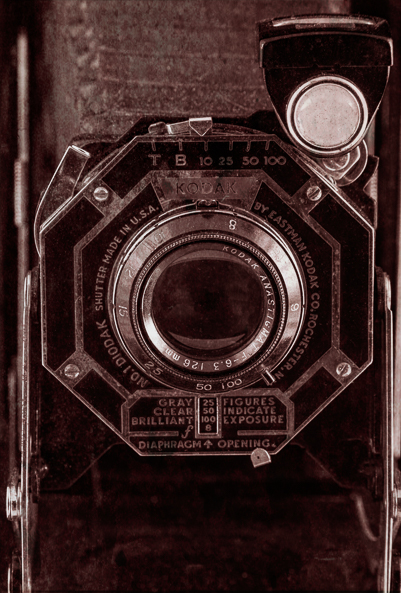
One of my grandmother’s cameras from long ago.
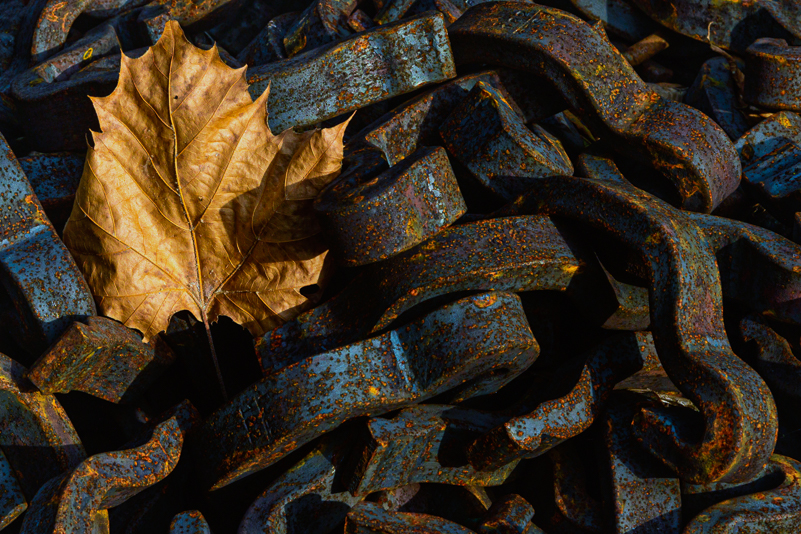
Railway metal meets with autumn
I have collections of things like vintage scissors, wooden spools of thread, thimbles, handmade doilies, all of which remind me of my childhood and youth. I have an abundance of vintage oil cans of different shapes, sizes, colors and styles – all pointing back to a time in history when we used our hands more than devices to make things happen and to care for what we had. “Back then,” we made things, engaged in crafts, took our time and had more patience to wait on results.
I understand the “age” within which I live, but I miss the slower times. We wrote letters, not texts. We called one another on the phone and had long conversations. There was no such thing as “LOL” or emojis. I’m not what I would consider to be “old” (or at least I don’t feel old at age 66), but I do love reflecting back over time and steeping sometimes in nostalgia. Perhaps, that is one of the things that drive me to walk through thrift stores on “vintiqueing” quests for more small items to add to my growing collection of old or aging things. There’s a sense of nostalgia in my admiration and appreciation.
Nostalgia is defined as a “bittersweet emotional state combining pleasure and slight sadness when recalling an irrecoverable or idealized period, person or place from the past.” There is that in my collecting and noticing, but also an appreciation of the times when things were built to last and stand the test of time. The automobiles of times gone by come to mind. They were made of steel, designed with all measure of style and characters. Just think of the hood ornaments, emblems, hubcaps, for example, that are now collectibles. This certainly explains why I have been traveling to Old Car City USA in White, Georgia, for well over fifteen years, just to photograph the cars “collected” by its owner, Dean Lewis. He’s the other real reason I go. Even in their rusted states, the character and charm of these relics remain. I will continue to make the trek until the doors close forever.

Me and Dean Lewis, one of my favorite people.
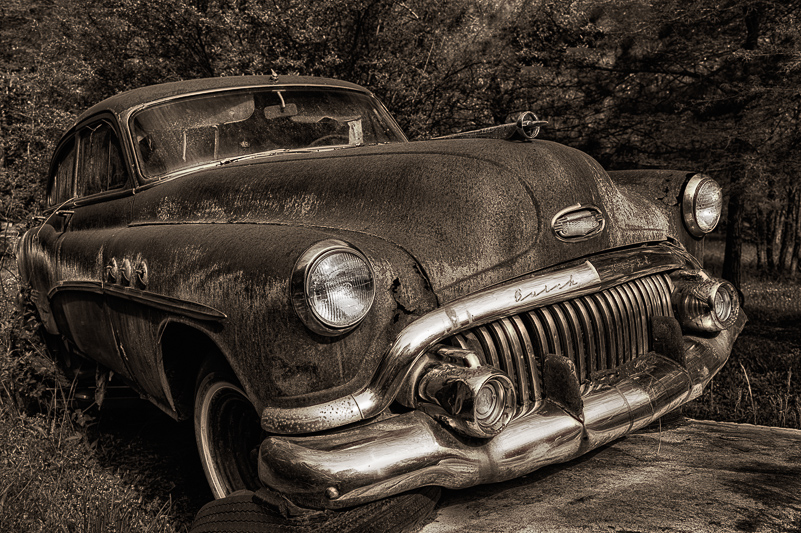
Buick built to last in Old Car City USA

Just once, I found the Green Hornet – now gone due to sticky fingers
This appreciation of “old” also explains why I cannot stop photographing the fishing vessels (work boats) scattered along the harbors of coastal towns throughout Eastern North Carolina and beyond. These boats are warriors, old, often very old, well used, and all show the scars of decades of work on the sea. These boats are slowly drifting away as are the old salts who spent their lifetimes on the sea and are retiring from the industry. Sadly, many of the harbors and docks are bought and sold and replaced with fancy, waterfront developments and condominiums. All that once was in some areas is no more, forever. The same fate has been happening on land as family farms are no longer continued by the children. The land is sold to create treeless developments on what once produced crops that provided for others, This is why I have a love of old barns and tractors and tools of the agricultural trade. I’ve had conversations with many seamen and farmers over the years. Whenever I asked them if they would do anything else, they all confirmed that though the work is hard, they would not want to trade what they do for anything. Something about working the land and sea runs in their blood. Many do the work until they die or until their bodies tell them it’s time to stop.
I understand this thinking. I will always photograph, even as my subjects change. I will never stop noticing or appreciating the beautiful and not-so-lovely in this world. I will continue to notice the details and craftsmanship as well as the simple utility in things that are handmade or that make us use our hands. I realize that technology has made a lot of things easier for many. The laptop I use to work on to share this blog as well as the many editing features make things much easier for me. Yet, I still remember “typing” and the sound the keys made when they hit the paper — a visual-tactile experience, for sure. There’s something different that happens when we use our hands, minds and bodies to make or do something. There just is.
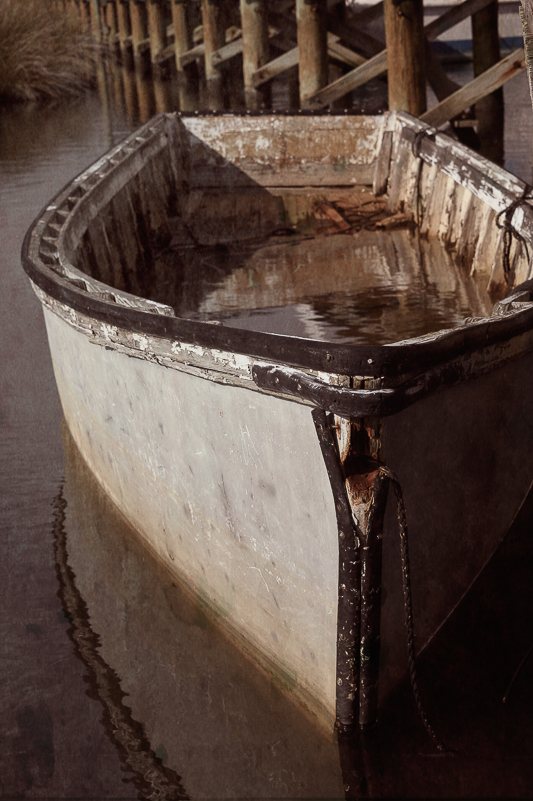
Dingy, now gone, in harbor at the end of the road.
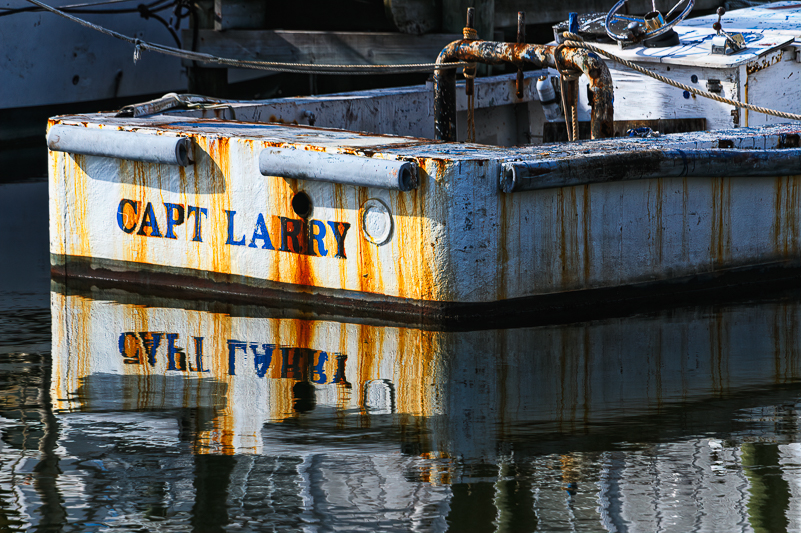
Wouldn’t you like to know more about Capt. Larry?
CHANGES THAT COME WITH AGE
In considering this blog on embracing “old” or “age” and aging, I also thought about how the years have changed me, inside and out. I hear a lot of people say, “don’t get old” or “it sucks getting old,” or even “everything falls apart when you get old.” I say to them that I am thankful to be here, that getting old doesn’t suck – though it can get a bit harder, and that “everything” is a big word that makes the statement untrue. More accurately, some things “fall apart” and don’t work as well as they used to, but often they are fixable. It’s a balancing act to keep things working as they should or as we would like. However, the path on which we are moving through this life on a one-way street. Slowing down, aging, maturity and a level of acceptance and appreciation is part of the process. I recognize the things I didn’t value nearly as much in my younger years. This likely contributes to the reasons I am drawn to locations and subjects that celebrate the “ravages” of time – the peeling paint, worn boards, cracked or broken windows and rust.
It’s a curious thing when I am more disappointed to see an old barn fixed up with new siding and windows than when it continues to acquire character until it falls down. In fact, this happened in the Finger Lakes recently. There was one beautifully rustic aged barn that we’ve photographed for several years. This year we returned to discover the barn got a facelift. With it went all the charm and character. The refacing ended my desire to photograph it anymore, even though it was still beautiful. Perhaps, a new paint job would have worked for me, but in this case everything – roof, siding and windows – was all replaced. I will never return to that barn again. I will miss it, but that run is over.

Can still hear the keys “thwacking” the paper.
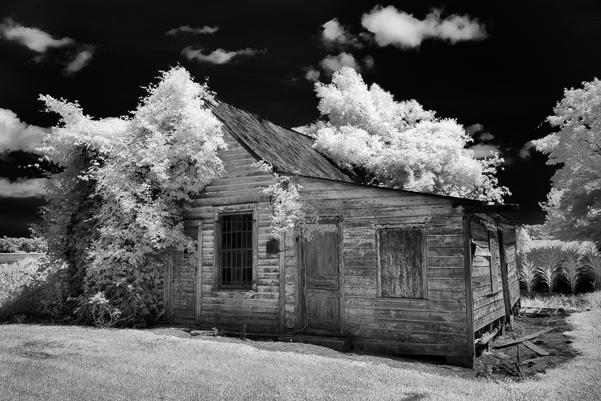
Roadside relic worth the turn-around in infrared (850nm)

Broken down dock makes for great long exposure foreground.
HOW EMBRACING “OLD” TRACKS IN MY PHOTOGRAPHY
After writing on the changes that come with time, I wondered how does this appreciation of old, worn, well used and less than perfect shows up in my photography. In part, it has changed my approach, has steered and enhanced my noticing (and seeking) of particular subjects, and has modified my perspective in different ways. In my neck of the woods, Eastern North Carolina, there are places that have had special appeal for me that either no longer exist or that would raise the eyebrows at my excitement and descriptions of such as “beautiful.” The average person, especially a non-photographer just cannot see what the attraction is. Some of these places include “my barns” in Cameron, Frisco Pier (no longer here), Wanchese, Swan Quarter, Engelhard and Harkers Island. All of these places hold a place in my heart that flinches each time I visit and notice more signs of them fading away.
When I spend time in some of my favorite gardens, especially when they are in a seasonal or planting transition, I look for the freshly beautiful, of course, but I also seek out the flowers and plants with flaws (tulips with missing petals, poppies with only seed pods remaining, and even brown, dried and twisted remains of blooms well past prime). When I drive the back roads, it’s the broken down, abandoned buildings that stop me. It’s the broken windows, missing boards, rusty nails and weeds and vines in the process of “claiming” that draw me in. When I photograph coastal villages, it’s the weather-worn and well-used floats, ropes and crab pots that call my name. It’s the same thing with the older wooden boats that need some paint or more to cover their scars, or the docks where they float, waiting for the next trip out to sea. Loose or missing boards catch my attention as much as paint-dripping patterns that reflect attempts at maintenance. Tools of any longstanding trade that show clear signs of work and wear will always draw me in over the new and shiny.

One of my Cameron barns that no longer stands.

Weary but beautiful sunflower.
Treasures in the forest can be beautiful regardless of whether new or fading, but finding a skeleton leaf in oddly “holy” pristine condition or a lone feather makes my heart sing! Some of these things I photograph in the field as I find them. Barns and boats are slightly immovable. Other things, like leaves, acorns, buckeyes, pinecones and more, seem to jump in my pocket to be saved and photographed later. The same thing happens when I go to “shop”. It’s a rare time when I go to stores that carry new merchandise. By choice, my favorite haunts and roadside stops usually include words like thrift, antique, collectibles in their names, and a variety of old stuff is scattered on the front side and around the building’s exterior. These are the places where I find small, old things that are interesting enough (and small enough) for me to take home – things like small milk bottles, doilies, oil cans, keys and key plates, to name a few.
Then, the flowers. They come in my house fresh and new, bold and beautiful, full of color and textures. The flowers generally take much longer to leave the house because of the intriguing way they twist and turn when they are without water and dry. I find tulips to be the most expressive. If you have by now concluded that I am addicted to the old and aged, you are probably right. The images shared in this blog tell only part of that story.

Bringing old treasures together.

Tulip gone dry and curly.

Fun with my oil cans and ranunculus.
LESSONS AND FINAL THOUGHTS
From a younger person’s perspective, I may be “old.” From mine? I am “older,” wiser and more appreciative of most things. I have changed a lot in many ways. My photography has grown, changed and evolved over time and with my experiences shared along the way. Mostly, and importantly, I photograph for myself. Even though I share my work and am a professional photographer and educator for a living, It’s “me first” for my art. The mechanics of photography have changed some with digital and mirrorless, but are basically the same. It’s still working with light and “the triangle” and what you put in the box.
The growth comes in the noticing and the learning of how to use the tools to express what you see and feel about the subjects and the moments. If you appreciate “vintage” anything, as I do, you understand that there’s more to everything than what meets the eye. There are memories, history and endurance over time that adds value and impact to even the smallest of things. Some stuff packs a huge metaphorical punch. Wrinkles, stains, dents and broken pieces can speak volumes. We just need to be open to seeing beyond the obvious.

Lone feather in abandoned nest with tiny eggs.

Lone soldier tree on Blue Ridge Parkway, now gone.

Fading fern in its fall color.
Is there something old in your world, in your home, in a drawer, that is special to you? Is there something that others may recognize as just a thing, but the memories attached to it for you make it more significant and meaningful? Consider spending time with it and make some images. If you take your time to consider its real meaning in your life, you may be surprised by what you create in your images. Embrace old and aging. Find and celebrate its beauty. You won’t regret it.
To photograph: it is to put on the same line of sight the head, the eye and the heart.
—Henri Cartier-Bresson

Longwood tulip missing a few petals.

Abandoned and overtaken.

Frisco Pier on its last weekend standing.

Last view of old Finger Lakes barn before it was refaced.

Vintage metal toy carriage and very old children’s books


